

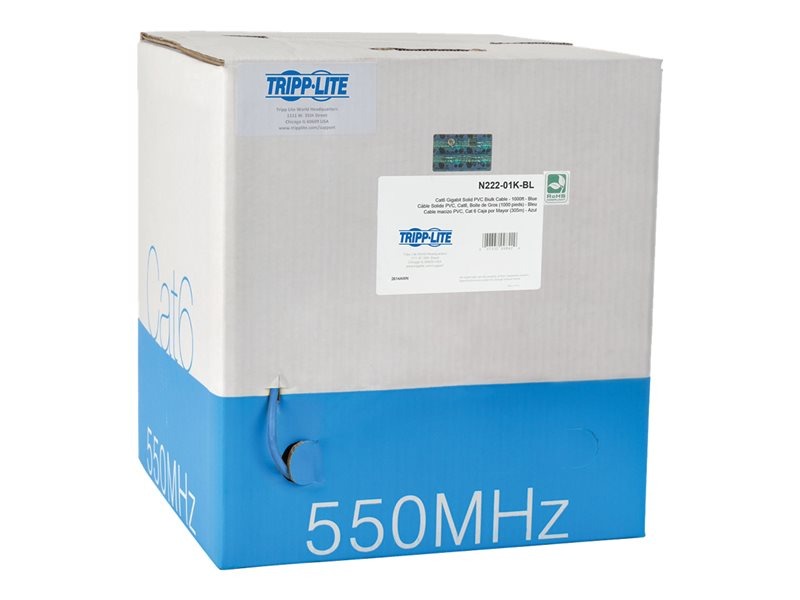
Structured Cabling Contractor’s Guide to Bulk Cat6 Cable Pricing Leave a comment
For structured cabling contractors, network cable is more than another line item on a project estimate. Cable can represent a significant portion of the material budget, particularly on large commercial installations where thousands of feet may be required.
Understanding bulk Cat6 cable pricing can help contractors prepare more accurate bids, compare supplier quotes, control material costs, and select cable that meets the requirements of the installation.
Whether you are wiring an office building, school, warehouse, healthcare facility, data center, or government project, the price of Cat6 cable can vary considerably depending on the cable specification, jacket rating, quantity, manufacturer, copper content, and supplier.
This guide explains the major factors behind bulk Cat6 cable pricing and provides practical purchasing strategies for structured cabling contractors.
Table of Contents
What Determines Bulk Cat6 Cable Pricing?
Cat6 cable does not have one universal price. Two products that look similar on a supplier’s website can have significantly different costs because their construction, certifications, performance specifications, and intended installation environments differ.
The most important pricing factors include:
- Copper content and conductor construction
- Cable category and performance rating
- CMR, CMP, or other jacket rating
- Box and case quantity
- Manufacturer and product quality
- Certification and compliance requirements
- Color and packaging
- Shipping and delivery requirements
- Current raw-material costs
- Total project volume
Understanding these variables makes it easier to compare quotations based on the actual specification rather than simply choosing the lowest number.
How Copper Prices Affect Cat6 Cable Cost
Copper is one of the major raw materials used in traditional copper Ethernet cable. As a result, changes in the copper market can influence manufacturing costs and eventually affect distributor and contractor pricing.
When copper costs increase, cable manufacturers may adjust their pricing. When raw-material costs decline, reductions may eventually appear in supplier quotations, although the timing can vary because manufacturers and distributors may be selling inventory purchased at earlier prices.
For contractors, this means a cable quotation should be evaluated according to its validity period.
If a project will not begin for several months, ask the supplier:
- How long is the quotation valid?
- Is the quoted price fixed?
- Is the product currently in stock?
- Could the price change before shipment?
- What quantity is available?
- Can the supplier reserve inventory?
These questions can be particularly important for large structured cabling projects.
CMR vs. CMP: Why Jacket Rating Changes the Price
The cable jacket is another important factor in bulk Cat6 cable pricing.
Two commonly encountered ratings are CMR and CMP.
CMR Cable
CMR, commonly referred to as riser-rated cable, is designed for appropriate vertical or riser applications where the installation requirements permit its use.
It is commonly specified for many commercial and building installations.
CMP Cable
CMP, commonly known as plenum-rated cable, is designed for installation environments where the applicable building code requires plenum-rated communications cable.
CMP cable generally costs more because it must meet more demanding flame and smoke requirements.
Contractors should therefore specify the correct jacket rating before requesting a quote. Using a more expensive cable when it is not required can increase material costs, while using a cable that does not meet the requirements of the installation can create compliance and project risks.
Always verify the applicable code, project specification, and cable listing before selecting a jacket type.
How Quantity Affects Bulk Cat6 Cable Pricing
For contractors, purchase quantity can have a major impact on the price per foot.
A supplier may offer different pricing for:
- One 1,000-foot box
- Multiple boxes
- A full case
- Multiple cases
- Pallet quantities
- Large project-specific orders
For example, a contractor purchasing a few boxes for a small service job may receive standard distributor pricing. A contractor purchasing tens or hundreds of boxes for a large project may qualify for project or volume pricing.
This is why contractors should provide the total estimated cable requirement when requesting a quotation.
Instead of asking:
“How much is one box of Cat6?”
a better RFQ might specify:
“Please quote 40 boxes of 1,000-foot Cat6 CMR cable, blue, solid copper, with applicable certifications.”
The supplier can then provide pricing based on the actual project volume.
Example Bulk Cat6 Cable Pricing Ranges
Cable prices change according to manufacturer, construction, market conditions, certifications, quantity, and supplier. Therefore, published price ranges should be treated as general budgeting references rather than guaranteed current quotes.
A contractor may encounter different pricing levels for:
| Cable Type | Typical Packaging | Main Pricing Considerations |
|---|---|---|
| Cat6 CMR | 1,000 ft box | Brand, conductor, certification, quantity |
| Cat6 CMR | Multiple-box order | Volume discount and project pricing |
| Cat6 CMP | 1,000 ft box | Plenum construction and certification |
| Cat6a CMR | 1,000 ft box | Higher performance specification |
| Cat6a CMP | 1,000 ft box | Performance plus plenum rating |
| Cat6 bulk project order | Case/pallet | Total volume and negotiated pricing |
For an actual project, contractors should request a current quotation instead of relying on an older online price.
Solid Copper vs. CCA: Why the Difference Matters
One of the most important considerations when comparing inexpensive Ethernet cable with professional-grade cable is the conductor material.
Solid copper cable uses copper conductors and is commonly specified for permanent structured cabling installations.
Copper-clad aluminum (CCA) cable uses an aluminum core with a copper coating. It can sometimes appear substantially cheaper, but it may not meet the requirements expected for a particular structured cabling installation or project specification.
Contractors should verify the conductor construction before comparing prices.
A lower price does not necessarily represent a lower total project cost if the cable creates testing problems, performance issues, rework, or specification concerns.
What Makes Professional Cat6 Cable Different?
A cable’s printed Cat6 designation is only one part of the purchasing decision.
Professional structured cabling projects may require consideration of:
- Conductor material
- Conductor size
- Insulation construction
- Jacket rating
- Cable diameter
- Maximum installation length
- Temperature rating
- Certification
- Standards compliance
- Manufacturer documentation
- Traceability
- Packaging and footage markings
Quality cable is designed to maintain the electrical performance required by its specification when properly installed and terminated.
Contractors should therefore compare complete specifications rather than selecting cable solely because it has the lowest price per box.
How to Compare Cat6 Cable Quotes
When receiving several supplier quotations, place the offers side by side.
Compare:
- Manufacturer
- Manufacturer part number
- Cable category
- Jacket rating
- Conductor material
- Conductor size
- Cable length
- Color
- Certification
- Quantity
- Price per box
- Price per foot
- Shipping cost
- Lead time
- Quote expiration date
Calculating the delivered cost per foot can provide a more useful comparison than looking only at the advertised box price.
For example:
Delivered cost per foot = (Cable price + applicable shipping) ÷ total cable feet
This helps contractors compare suppliers on a more consistent basis.
How Contractors Can Reduce Cable Costs
Reducing material costs does not necessarily mean buying the cheapest available cable. Instead, contractors can improve purchasing efficiency.
Buy According to the Project Quantity
Ask suppliers for project pricing when the order is large enough to justify it. A contractor purchasing several cases should not automatically assume that individual-box pricing is the only option.
Request Multiple Quantities
When requesting a quote, ask the supplier to provide pricing for different quantities.
For example:
- 10 boxes
- 25 boxes
- 50 boxes
- 100 boxes
This shows where volume discounts begin and can help with project budgeting.
Standardize Frequently Used Products
If your company regularly installs the same cable specification, standardizing on compatible products can simplify purchasing and inventory management.
Plan Purchases Before Installation
Last-minute purchases can reduce your ability to compare suppliers and may result in expedited shipping costs.
Obtain cable quotations while preparing the project estimate whenever possible.
Compare Delivered Pricing
A supplier with a slightly higher product price may still have a lower total cost if shipping is cheaper or included.
Always compare the complete delivered cost.
Bundle Related Materials
Large structured cabling projects often require more than bulk cable.
Depending on the installation, contractors may also need:
- Patch panels
- Keystone jacks
- RJ45 connectors
- Patch cables
- Cable managers
- Faceplates
- Rack hardware
- Cable ties
- Labels
- Fiber products
- Installation accessories
Requesting a complete bill-of-materials quotation can make it easier to evaluate the total project cost.
Don’t Sacrifice Compliance for a Lower Cable Price
A low cable price can look attractive during bidding, but the cheapest cable may not be appropriate for every installation.
Before purchasing, confirm that the cable meets the project’s required specifications and applicable standards.
For commercial, institutional, and government projects, documentation may be particularly important.
Contractors should verify requirements relating to:
- Cable category
- Jacket rating
- Conductor construction
- Applicable listings
- Project specifications
- Standards compliance
- Country-of-origin requirements where applicable
- Customer or government purchasing requirements
If the project documents specify a particular manufacturer or certification, confirm those requirements before substituting another product.
Building a Better Cable Estimate
A reliable material estimate starts with the actual cable requirement.
For example, a contractor can calculate:
Estimated cable requirement = number of drops × average cable length
Then add an appropriate project allowance for routing, termination, waste, and installation conditions.
The exact allowance depends on the project and installation method, so contractors should use their established estimating practices rather than applying one universal percentage to every job.
Once the estimated footage is known, convert the requirement into the supplier’s packaging units.
For example, if a project requires approximately 28,000 feet and the selected cable is supplied in 1,000-foot boxes, the purchasing team can determine the number of boxes required and then request project pricing.
Questions to Ask a Bulk Cable Supplier
Before placing a large order, contractors should ask:
Is the cable solid copper?
Confirm the conductor construction rather than assuming it from the product title.
Is the cable CMR or CMP?
Verify the jacket rating against the project’s installation requirements.
What certifications or listings does the cable have?
Request applicable documentation when required by the project.
What is the manufacturer part number?
The exact part number helps prevent substitutions and specification mismatches.
Is the quoted price based on the complete quantity?
Make sure the quotation reflects the total number of boxes or cases required.
How long is the quote valid?
This is particularly important when material costs are changing.
Is the cable currently in stock?
A low price is less useful if the required quantity is not available when the project starts.
Can you quote the complete bill of materials?
A complete quote can make procurement easier and may provide opportunities for consolidated shipping.
Bulk Cat6 Cable Pricing for Contractors
For structured cabling contractors, bulk Cat6 cable pricing should be evaluated as part of the complete project cost rather than as a standalone box price.
Copper costs, jacket rating, cable construction, quantity, manufacturer, certifications, shipping, and availability can all affect the final price.
Contractors who understand these variables can request more precise quotations and build better material estimates before submitting project bids.
Get a Bulk Cable Quote for Your Next Project
One Stop Shop Solutions Inc provides networking and structured cabling products for business, commercial, and organizational purchasing.
Contractors can explore bulk Cat6 cable and networking products or contact One Stop Shop Solutions Inc to request pricing for project quantities. You may also visit us on Pinterest.
When requesting a contractor quote, include the cable category, jacket rating, color, footage, quantity, manufacturer or part number if specified, delivery location, and any project-specific requirements.
Providing a complete bill of materials can help suppliers prepare a more accurate quotation.
Frequently Asked Questions About Bulk Cat6 Cable Pricing
What is bulk Cat6 cable pricing?
Bulk Cat6 cable pricing refers to the cost of purchasing Cat6 Ethernet cable in larger quantities, such as multiple 1,000-foot boxes, cases, or project-level quantities. Pricing depends on cable specifications, quantity, manufacturer, market conditions, shipping, and supplier terms.
How much does a 1,000-foot box of Cat6 cable cost?
The price varies significantly by cable construction, manufacturer, jacket rating, conductor material, certifications, and market conditions. Contractors should request a current quotation for the exact Cat6 specification and quantity required.
Is bulk Cat6 cable cheaper than buying individual boxes?
Bulk orders can receive lower per-unit or per-foot pricing, particularly when purchasing multiple cases or larger project quantities. The actual savings depend on the supplier, quantity, shipping, and negotiated terms.
What is the difference between Cat6 CMR and CMP cable?
CMR and CMP refer to different cable jacket ratings intended for different installation environments. CMP cable is generally used where plenum-rated communications cable is required. Contractors should follow the applicable project specifications and building-code requirements.
Should contractors buy Cat6 or Cat6a?
The appropriate cable depends on the network requirements, project specification, installation environment, equipment, and desired performance. Contractors should select the category specified for the project rather than automatically choosing the higher category.
Is solid copper Cat6 better for structured cabling?
Solid copper cable is commonly used for permanent structured cabling because of its electrical characteristics and suitability for structured cabling applications. Contractors should verify the exact project specification and cable requirements before purchasing.
How can contractors get better Cat6 cable prices?
Contractors can request project-volume pricing, compare multiple suppliers, purchase appropriate quantities, plan orders ahead of installation, compare delivered cost per foot, and request pricing for the complete bill of materials.
What information should I provide when requesting a bulk cable quote?
Provide the cable category, CMR or CMP requirement, conductor construction, color, box length, number of boxes, manufacturer or part number if required, delivery location, project timeline, and any certification or compliance requirements.
Can I request a contractor quote for bulk Cat6 cable?
Yes. Contractors can provide their required cable specification and project quantity to a supplier for a quotation. A complete bill of materials can also be provided when pricing multiple networking and structured cabling products.
Final Takeaway
The lowest advertised box price is not always the lowest project cost. Contractors should evaluate bulk Cat6 cable pricing based on the complete specification, delivered cost, quantity, availability, certification, and suitability for the installation.
By planning material requirements early, requesting project-volume pricing, comparing suppliers carefully, and verifying cable specifications before purchasing, structured cabling contractors can make more informed procurement decisions while protecting project quality and margins.
